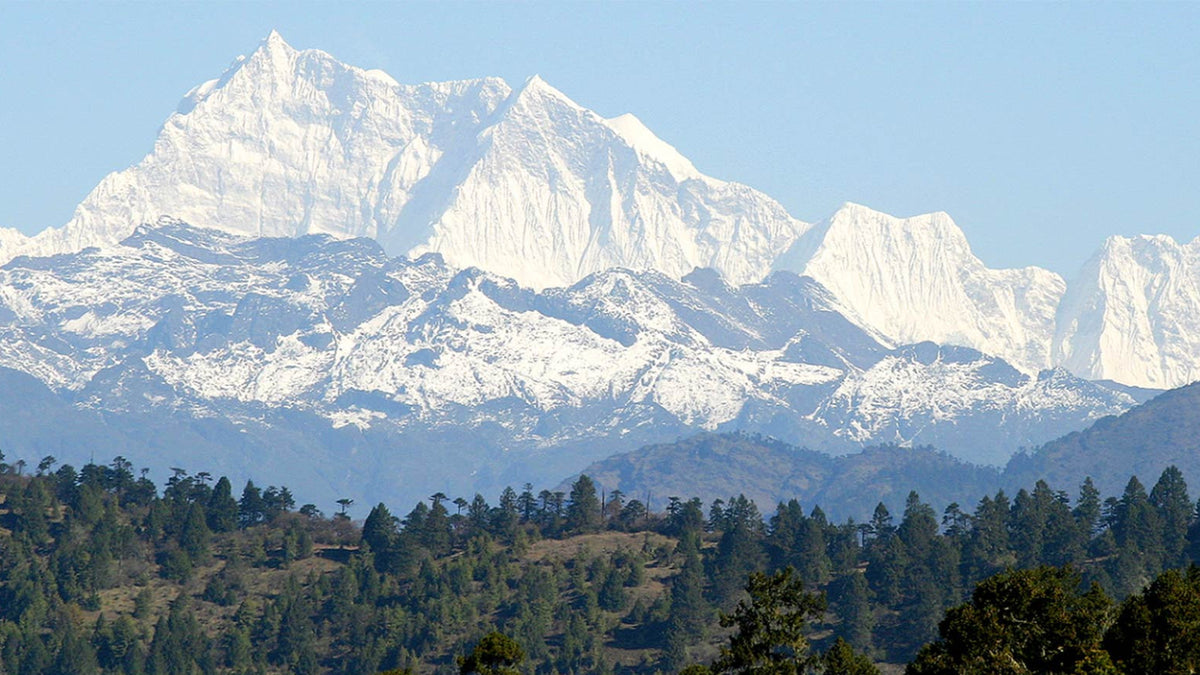
Before a bottle has a label, it has a landscape. For KUZŪ, that landscape is Bhutan: a place we belong to, and a place whose name deserves to be used carefully.
“Pure” can be an evocative word. It can also become an unhelpfully broad promise. A forest photograph cannot tell you whether a particular ingredient was tested for a particular contaminant. A country of origin does not replace a laboratory report.
Let the landscape be a beginning
Bhutan’s Department of Tourism describes the country’s constitutional commitment to maintaining at least 60 percent forest cover. That is meaningful national context. It is not a measurement of the air, water or soil at an individual harvest site, and it cannot establish the composition of a finished tincture.
We want the beauty of Bhutan to invite curiosity. Where did the ingredient come from? Who handled it? When was the sample collected? Which test was performed? A useful answer becomes more specific with each question.

Gangkhar Puensum the highest mountain in Bhutan and the highest unclimbed mountain in the world at 7570 meters above the sea
A more useful meaning of purity
For a customer, the practical next step is to read a batch record alongside the product label. Look for a clear sample identity, a dated report, the tests actually performed and the relevant results. Ask about anything missing. “Not detected” should be read with the method’s detection limit; it is not a universal statement of zero.
We can love a landscape without asking it to stand in for evidence. That is the standard we want the KUZŪ story to meet: rooted in place, open to questions, and precise about what is known.
This article makes no batch-specific environmental purity claim.*